
In this podcast, HYDAC Technical Training Officer, William Shaw, discusses screw pump sizing considerations with HYDAC National Development Manager for Cooling Systems, Andrea Cimadoro.
Mr Cimdoro has around two and a half decades of experience in the aerothermodynamics industry around the globe.
Mr Shaw: A cooling system typically has a reservoir, a pump and piece of plant that you’re trying to cool, whether it be a gearbox bearing and cooler, a filter and return line back to the reservoir, and possibly some sensors.
Therefore, when looking at pump options, why would someone choose a screw pump? What are we specifically looking at with screw pumps, and why are they used in cooling systems?
Mr Cimadoro: The screw pump is a positive displacement pump, under the positive displacement family, and part of the rotary group.
Many other pumps exist within these two subgroups, but the beauty of the screw pump is the fact that it’s extremely quiet and low in vibration.
This translates to equipment life longevity. Therefore, for the most part, we use this pump in our lubrication systems.
Mr Shaw: You briefly mentioned the positive displacement pump. Would you be able to expand on that a bit more?
Mr Cimadoro: Yes. The positive displacement pump is basically a pump that has the same flow at a given speed, which means it is independent from discharge pressure.
On the contrary, the flow in the negative displacement pump varies dependent on discharge pressure.
Therefore, in that respect, the positive displacement pump has more stable and constant behaviour. Again, this points to longevity. It also points to endurance. And in tough conditions, it’s an ideal choice.
Mr Shaw: What are some of the benefits of using a screw pump compared to a gear pump or a vane pump, as examples, in the tough conditions mentioned?
Mr Cimadoro: Noise is noticed by everyone immediately. The screw pump is three to five times quieter than a vane pump.
And if you have an application in a laboratory, factory, or building, as examples, you only hear electric motor noises over the screw pump.
The other point is that because it has constant flow and constant displacement, it also comes with constant noise.
This becomes longevity and avoiding being a slave of conditioning and refurbishing the shaft seal such as in the case of gear pumps.
Another benefit of the screw pump is that it caters for a long viscosity range of between 23cSt up to 10,000 or 20,000cSt.
This ensures the screw is suited to a broad spectrum of applications.
The screw pump is very versatile when it comes to HYDAC applications. Depending on the way the screw pump is configured, it can be used for oil, high viscosity, low viscosity, and magnet oil etc. It’s not a one pump fits all scenario.
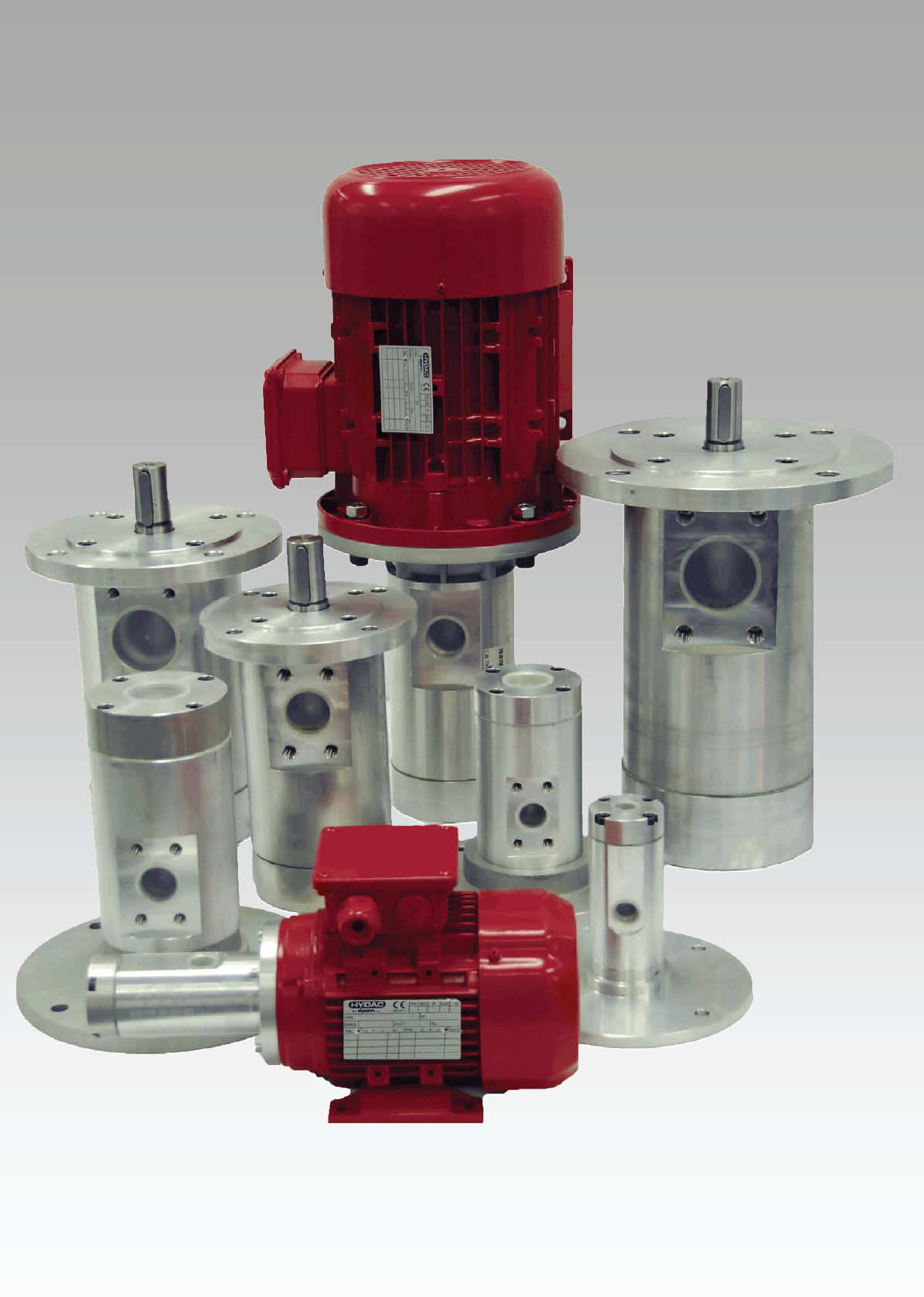
There are also different recipes to build a screw pump so that it can be applied to a specific fluid or working condition.
Mr Shaw: It is clear the screw pump is suited to many applications. However, for what applications is it not suitable due to inherent limitations?
Mr Cimadoro: Yes, there is a tendency for people to think that the screw pump can be used in any fluid. The reality is that we deal with a lot of engineering clients at HYDAC. In this instance, in that the screw pump has components made of cast iron steel and aluminium, we encourage clients to send the datasheet of the fluid in question to ensure it is compatible.
The internal analysis that we execute before we continue also looks at acid pH etc.
Mr Shaw: It sounds like the screw pump is versatile provided that the fluid used in the application is compatible.
With this in mind, why isn’t the screw pump used in a lot more applications?
Mr Cimadoro: The reason for this is because the screw pump is more sensitive than other pumps in terms of the design of its suction line. And that’s why we use the screw pump in lubrication system because we normally always have the screw pump level or above the suction line.
This means there isn’t an empty pump on top of a tank. In general, pumps are not empty, especially a screw pump.
Mr Shaw: How do I go about sizing a screw pump for a cooling application?
Mr Cimadoro: First, you could send us relevant data such as type of fluid and temperature range, suction characteristic condition, and whether catering is required for a cold start.
Once we have these parameters, we use our resizing software. This is a nice tool developed by HYDAC’s research and development team in Switzerland and Germany.
Following this, we provide the customer with the software’s output with five charts: pressure, flow, and power consumption etc.
The most importance one is net positive suction head (NPSH) required by the pump.
NPSH is an important piece of data for whoever is designing a lubrication or hydraulic system.
Mr Shaw: It appears that online screw pumps can only be found at HYDAC Australia apart from HYDAC Germany. Is there a reason behind this, and why is HYDAC’s Australian division able to make this offering?
Mr Cimadoro: This was strategically decided due to Australia being remote from the rest of the world.
There is no other pump that is more cost effective when we compare price versus efficiency.
In view of this we made the decision that this is the way to go for lubrication systems that we started producing in Australia more than a decade ago.
Of importance is that we have supplied the Australian market with more than 3000 screw pumps over the past decade.
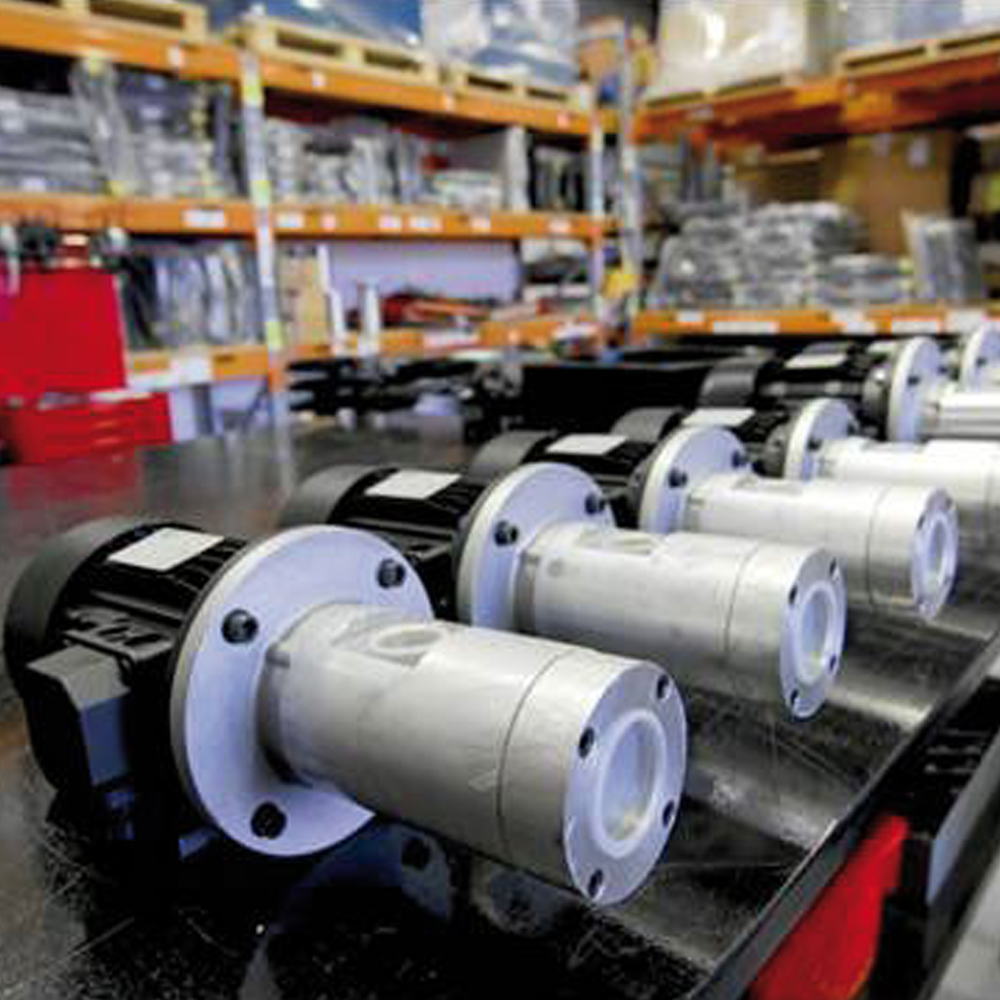
We carry quite some stock, and we have a good turnaround time.
We can quickly do modifications, adjust the suction line: axial or perpendicular.
We can also change the flange according to electrical motor requirements and adjust bypass settings.
Every pump has an integrated relief valve, which can be 5, 10 or 15 bar, which we can change or adjust at a local level.
The screw pump is the heart of our lubrication system.
Moreover, we were recognised as a centre of excellence for this product by the European development partner and German mother company.
We size and export screw pumps and assist colleagues in the Australasian region whether it be Singapore, New Zealand, Thailand, or Indonesia – even Chile and US on the other side of the Pacific.
We apply our knowledge at a local level.
Mr Shaw: What is the lead time availability of one of these screw pumps?
Mr Cimadoro: We carry much stock but if there isn’t stock, we can try to convert another pump. Those are options A and B. Option C is three to four weeks to manufacture the pump overseas plus freight. This means the pump can easily be here in four to five weeks.
Contact us for more information


